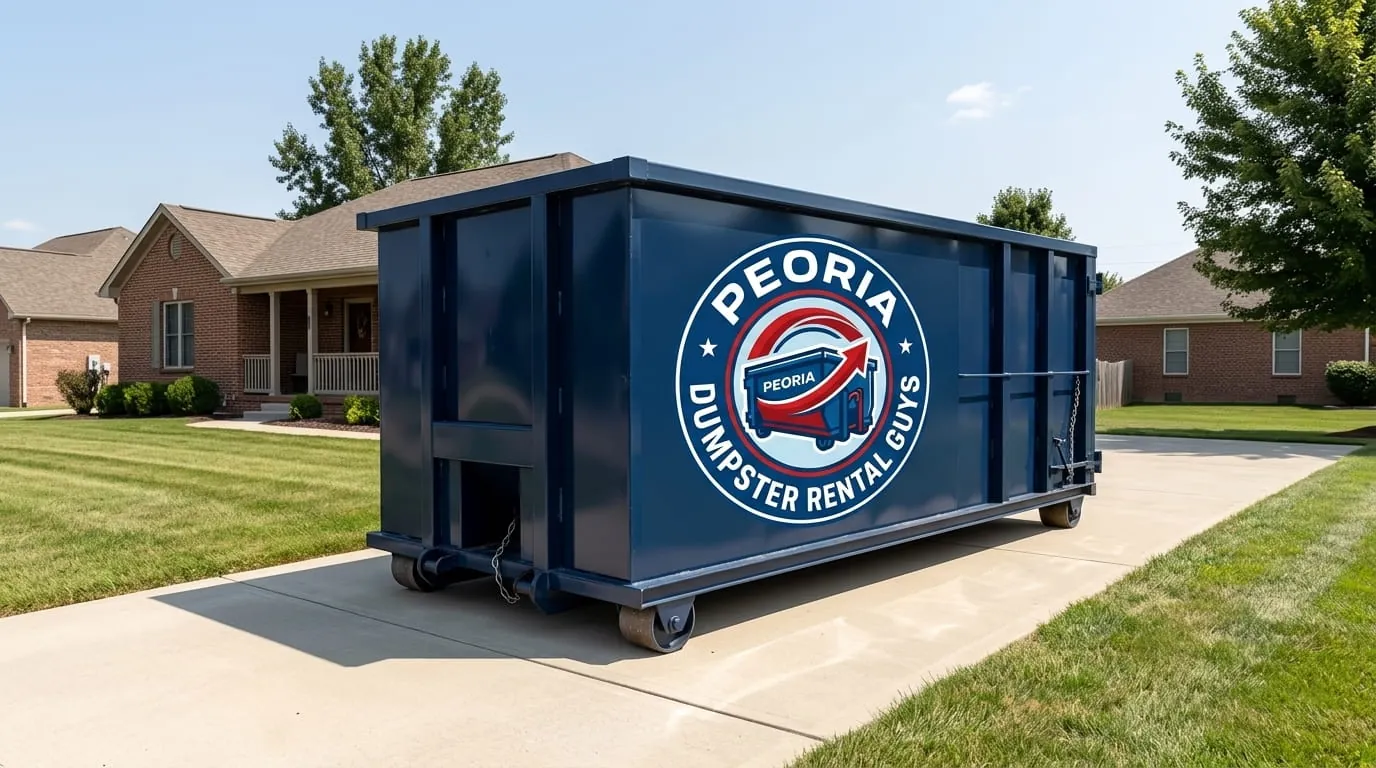
Ask any roll-off operator in the West Valley what load they respect the most, and a lot of us will say the same thing: a tile roof tear-off. Here in Peoria, we run a mix of asphalt shingle, foam, and heavy concrete or clay tile, and each one behaves completely differently in the bin. Put the wrong roof in the wrong dumpster and you are looking at an overage charge, a truck that can't legally leave your driveway, or a driver who has to turn around and split the load. This guide walks you through the weight math, the size logic, and the Arizona-specific quirks so your re-roof goes off without a hitch.
Why Roofing Debris Is Its Own Animal
Most homeowners think about dumpsters in terms of volume: how much stuff can I cram in there. Roofing flips that on its head. Shingles and tile are dense, heavy material, and you will almost always hit a weight limit long before you fill the box to the top. That is the single most important thing to understand about ordering a bin for a tear-off. A 20-yard dumpster might swallow a whole garage cleanout with room to spare, but load it with tile and you'll bury the axles before it looks half full.
That is exactly why seasoned crews order a dedicated, small bin for roofing and nothing else. You do not mix a roof tear-off with drywall, cabinets, and yard waste. You keep it clean, you keep it heavy, and you keep it in a box that is sized for the tonnage, not the cubic yards. For a full breakdown of how we match jobs to boxes, our roofing dumpster rental service page lays out the standard configurations we run for Peoria re-roofs.
The Weight Math: Squares, Bundles, and Tons
Roofers measure in squares. One square equals 100 square feet of roof surface. A typical Peoria single-story home runs somewhere between 15 and 30 squares depending on footprint and pitch. Here is where the material matters, because a square of asphalt weighs a fraction of a square of tile.
Asphalt Shingles
A square of standard three-tab asphalt shingles weighs roughly 200 to 250 pounds. Architectural or dimensional shingles run heavier, closer to 350 to 450 pounds per square. Shingles ship in bundles, and it usually takes three bundles to cover one square, so figure each bundle at 60 to 80 pounds for a three-tab and up to 150 pounds for a premium architectural product.
Run the numbers on a 20-square asphalt roof: 20 squares times roughly 250 pounds is about 5,000 pounds, or 2.5 tons, for a single layer of three-tab. Architectural shingles on that same roof could easily push 3.5 to 4 tons. That fits comfortably in a small bin.
Concrete and Clay Tile
Now here is where Arizona homeowners need to pay attention. Concrete tile weighs between 900 and 1,100 pounds per square. Clay tile can run 600 to 1,000 pounds per square. That is roughly four times the weight of asphalt. A 20-square concrete tile roof is not 2.5 tons; it is 9 to 11 tons of debris coming off that roof.
Let that sink in. The exact same size roof produces four times the tonnage when it is tile. This is the number one mistake we see people make when they order a bin online without talking to anybody. They see "20-square roof, 20-yard dumpster" logic and end up with a box they legally cannot fill and a bill they did not expect. Tile is extremely heavy, and it has to be planned around from the first phone call.
Why a 10-Yard Bin Is the Tile Standard
A 10-yard roll-off is the workhorse of the tile tear-off world, and it is not because of the volume. It is because of the weight rating and the low walls. A 10-yard dumpster has short sides, which means your crew can pitch tile in from ground level or a short ladder instead of heaving it up over a six-foot wall. That saves labor and keeps the load distributed low and even, which matters when the material is this dense.
More importantly, the 10-yard box keeps you honest on tonnage. Filling a 20-yard bin with tile would blow past what a truck can legally haul on Arizona roads and past what most landfills will accept in a single pull. By splitting a big tile job across two or three 10-yard drops, we keep every load street-legal and avoid the dreaded scenario where a driver shows up and cannot lift the box. If your roof is on the larger side, a 15-yard dumpster can sometimes bridge the gap for a mixed or lighter tile job, but for straight concrete tile the 10-yard is almost always the right call. When in doubt, our guide on what size dumpster you need walks through the decision the same way we would on the phone.
Don't Forget the Layers
Arizona sun is brutal on roofing, and a lot of the homes we service have been re-roofed at least once. That means you may be tearing off two or even three layers of shingle. Every layer doubles or triples your tonnage. If you have an old asphalt roof that was shingled over instead of stripped, a "20-square single-layer" estimate might actually be 40 or 60 squares of material by weight.
Before you order, get up there or ask your roofer how many layers are coming off. On a tile roof, you also have to account for the old underlayment, the battens, and any rotted decking that comes off with the tile. That extra material adds up fast and it all lands in the bin.
Underlayment, Foam, and Flat Roofs
Not every Peoria roof is shingle or tile. Foam roofs, common on flat and low-slope homes across the Valley, are a different beast. Spray polyurethane foam is light by volume but it comes off in big awkward chunks along with the old coating and any gravel ballast underneath. Foam tear-offs are usually more of a volume problem than a weight problem, which flips the usual roofing logic, but you still want a dedicated bin so the sticky coating and foam do not contaminate other loads.
Underlayment, whether it is old felt or synthetic, peels off in rolls and mats and packs down denser than people expect once it is wet or sun-baked. Tar paper that has been cooking under Arizona UV for fifteen years is brittle and heavy. Bag it or bundle it so it does not blow around your yard on a windy afternoon, and factor it into your total.
The Arizona Angle: UV, Monsoon, and Re-Roof Season
Our climate drives the roofing business here. Intense year-round UV degrades asphalt shingles faster than almost anywhere in the country, so Peoria homes cycle through re-roofs on a shorter clock than the manufacturer warranty might suggest. Shingles get brittle, lose their granules, and curl. When they come off, they shatter into small heavy pieces that pack tight in the bin, which is good for volume but means you hit weight fast.
Then there is monsoon season. Every summer, microbursts and driving rain expose the weak spots, and we see a wave of storm-damage re-roofs from July through September. If your roof took monsoon damage and you are stripping it back to the deck, expect wet, heavy debris and possibly damaged plywood decking in the mix. Wet roofing material weighs noticeably more than dry, so if you are tearing off right after a storm, order conservatively on volume and give yourself weight headroom.
Tile roofs handle the UV and heat far better, which is why they are so popular here, but when it is finally time to replace one, all that longevity comes back as tonnage. A tile roof that has protected a home for thirty years is thirty years of heavy concrete or clay that has to be handled in one project.
Protecting the Driveway and Placement
A loaded roofing bin is one of the heaviest things that will ever sit on your driveway. Concrete tile debris can put well over ten tons on four small contact points, and a hot Arizona asphalt driveway in July is soft enough to dent. We always recommend putting down plywood or planks under the wheels and the rear of the box to spread that load. Our full write-up on protecting your driveway during a dumpster rental covers the boards, the placement, and the little tricks that save you from a cracked slab.
Placement also matters for the tear-off itself. You want the bin as close to the drip edge as possible so your crew is throwing debris a short distance, not hauling it across the yard. Think about where the roofers will be working and stage the box on that side of the house. Keep it clear of low power lines and irrigation, and make sure the driver has a straight, flat approach to set and retrieve it.
| Material | Weight per Square | 20-Square Roof (single layer) | Recommended Bin |
|---|---|---|---|
| Three-tab asphalt | 200-250 lbs | ~2.5 tons | 10-yard |
| Architectural asphalt | 350-450 lbs | ~3.5-4 tons | 10-yard |
| Clay tile | 600-1,000 lbs | ~6-10 tons | 10-yard (may split) |
| Concrete tile | 900-1,100 lbs | ~9-11 tons | 10-yard (split loads) |
Avoiding the Overage
Overage charges happen when the loaded weight of your bin exceeds the tonnage included in your rental. On roofing, the fix is simple: order the right size for the material and be honest about layers. If you tell us it is a single-layer asphalt roof and it turns out to be three layers of shingle over old cedar shake, the weight is going to surprise both of us. A five-minute conversation up front prevents almost every overage we ever see.
- Count your squares and multiply by the right per-square weight for your material.
- Multiply by the number of layers coming off.
- Add a cushion for underlayment, battens, and any rotted decking.
- For tile, plan on splitting the job across multiple small bins rather than forcing it into one big box.
- Keep the roof debris separate from all other project waste.
If you want a human to run the numbers with you, that is what we are here for. Browse our full list of services or reach out through our contact page and we will size the job right the first time. You can also call us directly at (928) 543-0503 and we will tell you exactly how many drops your roof is going to take.
Roofing is one of those jobs where a little planning saves a lot of money. Get the material weight right, respect how heavy Arizona tile really is, protect your driveway, and keep the load clean. Do that and your tear-off is just another good day on the job. Ready to book? Call Peoria Dumpster Rental Guys at (928) 543-0503 and let's get your roof off and gone.
Founder, Peoria Dumpster Rental Guys — sharing straight advice from more than 15 years of local hauling experience.
Frequently Asked Questions
What size dumpster do I need for a tile roof tear-off in Peoria?
For concrete or clay tile, a 10-yard dumpster is almost always the right choice because the limiting factor is weight, not volume. Tile weighs 600 to 1,100 pounds per square, so a typical 20-square roof produces 6 to 11 tons of debris. Larger tile jobs are usually split across multiple 10-yard drops to keep each load street-legal and liftable. Call us at (928) 543-0503 and we'll figure out how many bins your roof needs.
How much does a square of roofing weigh?
A square is 100 square feet of roof. Three-tab asphalt shingles weigh about 200 to 250 pounds per square, architectural shingles run 350 to 450 pounds, clay tile is 600 to 1,000 pounds, and concrete tile is 900 to 1,100 pounds. Tile is roughly four times heavier than asphalt for the same roof area, which is why it needs careful bin planning.
Why can't I just use one big dumpster for my whole tile roof?
Because tile is so dense, a single 20-yard bin filled with it would exceed what a truck can legally haul on Arizona roads and what most landfills accept per pull. The box would be too heavy to lift even though it looks half empty. Splitting the job across two or three 10-yard bins keeps every load safe, legal, and within your weight allowance.
Do I need to account for multiple roof layers?
Absolutely. Many Peoria homes have been shingled over rather than stripped, so a single-layer estimate can actually be two or three layers by weight. Every layer multiplies your tonnage. Check how many layers are coming off before ordering, and remember to add the old underlayment, battens, and any rotted decking to your total.
How do I protect my driveway from a heavy roofing dumpster?
Put plywood or planks under the wheels and the rear of the bin to spread the load, since a loaded tile dumpster can weigh over ten tons on a few small contact points. Arizona asphalt driveways get soft in summer heat and can dent, so boards are cheap insurance. Place the bin close to the roof's drip edge for easy loading and keep it clear of power lines and irrigation.