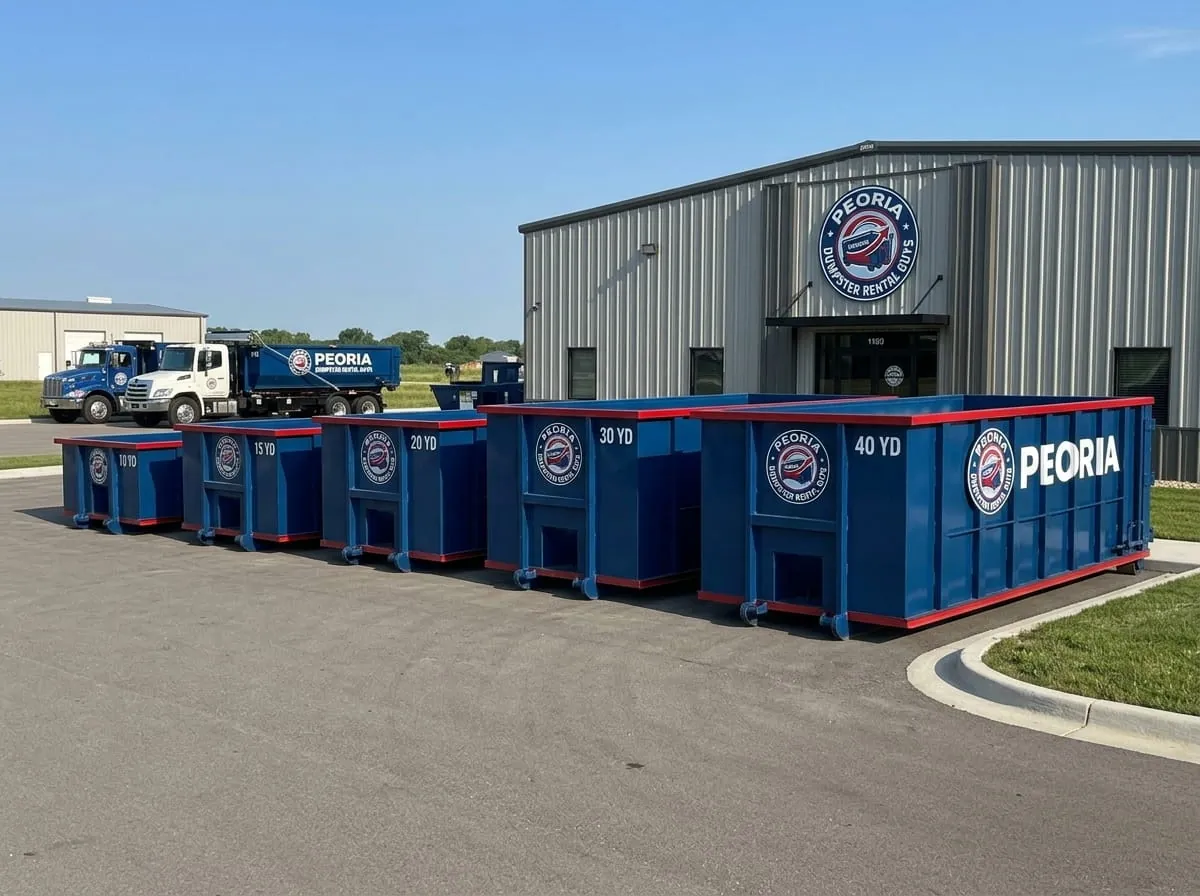
After years of dropping roll-off dumpsters on driveways from Vistancia down to Old Town Peoria, the number one question we get at Peoria Dumpster Rental Guys is simple: "What size do I need?" It sounds basic, but ordering the wrong size is the fastest way to waste money on a project. Too small and you're paying for a second haul or a swap-out. Too big and you're paying for air. This guide breaks down the four sizes we run - 10, 15, 20, and 30 yard - with real dimensions, real weight limits, and honest advice on matching a bin to your Peoria job.
How Roll-Off Dumpster Sizes Actually Work
When we talk about a "10-yard" or "30-yard" dumpster, that number is cubic yards of volume - not weight, not length. A cubic yard is a 3-foot cube, roughly the size of a standard washing machine. So a 20-yard bin holds about twenty of those cubes stacked and packed. The catch out here in the West Valley is that volume and weight are two completely separate limits, and desert debris - stucco, concrete, tile roofing, and gravel - hits the weight limit long before it fills the box. More on that below, because it trips up a lot of first-time renters in Maricopa County.
Every roll-off has an included weight allowance (measured in tons at the transfer station scale). Go over that allowance and you pay an overage fee, usually charged per ton. Understanding that number is just as important as picking the length, so we'll cover both.
The 10-Yard Dumpster: Small Footprint, Heavy Jobs
Dimensions run roughly 12-14 feet long, 8 feet wide, and 3.5-4 feet tall. It holds about 10 cubic yards - think three to four pickup truck loads. The low walls make it easy to toss heavy material over the side without a walk-up.
The 10-yard is our go-to for heavy debris. If you're tearing out a bathroom, demoing a section of tile floor, pulling up a concrete patio, or converting a grass lawn to a xeriscape gravel yard, this is the bin. Here's why: those materials are dense. A single load of concrete or wet dirt can hit the weight limit at less than half-full. A bigger box wouldn't let you legally add more weight - it would just tempt you to overfill and rack up overage charges. For pure heavy material, small and dense beats big and empty every time.
- Single bathroom remodel or small kitchen tear-out
- Concrete, brick, block, or paver removal
- Tile flooring or a small tile-roof section
- Xeriscape conversions - hauling out old sod, dirt, and rock
- Garage or single-room cleanout
See our 10-yard dumpster page for current pricing and weight allowance.
The 15-Yard Dumpster: The Sweet Spot for Mid-Size Projects
Around 16 feet long, 8 feet wide, and 4.5 feet tall, the 15-yard holds roughly five to six pickup loads. It's the size a lot of Peoria homeowners actually need but rarely order because they default to a 20.
This bin shines on medium remodels and mixed-debris jobs where you've got both bulk and some weight. A larger bathroom-plus-hallway remodel, a medium roof tear-off, a big landscaping overhaul, or a serious garage-and-shed cleanout all fit comfortably. It carries more volume than a 10 but still keeps a manageable weight ceiling, so it's a smart middle ground when you're not sure whether a 10 will be too tight.
Our 15-yard dumpster is one of the most popular rentals we run in the 85345, 85381, and 85383 zip codes.
The 20-Yard Dumpster: The Workhorse
Typically 20-22 feet long, 8 feet wide, and 4.5-5 feet tall, the 20-yard holds about eight pickup loads. This is the most versatile roll-off we offer and the one we drop most often on Peoria driveways.
The 20 is built for whole-room and multi-room renovations, larger cleanouts, and roofing on an average-sized home. Redoing a kitchen and a bathroom at once? Clearing out a whole house before a move or after an estate transition? Tearing off and replacing an asphalt-shingle roof? The 20-yard handles it with room to spare. It's tall enough for bulky furniture and cabinetry but not so tall that a full load of heavy material becomes a problem - though for a full tile-roof tear-off, we still lean smaller (see below).
- Whole-home or multi-room renovation debris
- Full-house or estate cleanout
- Asphalt shingle roof replacement
- Flooring removal across several rooms
- Large deck or shade-structure demolition
Compare it against the other sizes on our 20-yard dumpster page.
The 30-Yard Dumpster: Big Builds and Major Cleanouts
At roughly 22 feet long, 8 feet wide, and 6 feet tall, the 30-yard holds around twelve pickup loads. Those taller walls are the whole point - they swallow bulky, lightweight material that would overflow a shorter bin.
This is a new-construction and major-renovation bin. Framing scraps, drywall, packaging, and cardboard from a ground-up build in a master-planned community like Vistancia or Trilogy; a full home gut-remodel; or a large commercial cleanout. Because the material is bulky but relatively light, you can actually fill all that volume without slamming into the weight limit. Do not, however, order a 30 for concrete, tile, or dirt - you'd hit the tonnage cap with the box barely a third full, and you'd pay to move a lot of empty steel.
Details and availability are on our 30-yard dumpster page, or reach out through our construction dumpster rental service for job-site scheduling.
Weight Limits and Overage Fees - The Part People Miss
Here's where Peoria and the West Valley are different from most of the country. Our debris is heavy. Stucco knocked off a wall, clay roof tile, concrete, flagstone, and the decomposed granite from a xeriscape yard all weigh far more per cubic yard than the drywall and wood most online size charts assume.
Every dumpster comes with an included weight allowance in tons. When your loaded bin is weighed at the transfer station, anything over that allowance is billed as an overage, typically per ton. That's why we constantly steer heavy-material jobs toward the 10 or 15-yard bin - not to sell you less, but to keep you from overfilling a big box and getting a surprise on the scale ticket. A half-full 10-yard of concrete can legally hold more weight than a "full" 30-yard ever should.
Two practical rules we give every customer:
- Heavy and dense (concrete, tile, dirt, gravel, stucco): go small - 10 or 15 yard - and never fill past the fill line.
- Bulky and light (wood, drywall, furniture, cardboard, roofing shingles): go big - 20 or 30 yard - and use the volume.
Not sure what counts as heavy or what's even allowed in the bin? Our guide on what can go in a dumpster spells it out, and it matters for your final bill.
Matching the Bin to Common Peoria Jobs
Bathroom vs. Whole-Home Renovation
A single-bathroom gut is a 10-yard job - the tile, vanity, and drywall are heavy but low-volume. Add a kitchen or go multi-room and you jump to a 20. A full whole-home renovation with cabinetry, flooring, and fixtures across the house is a 20 or, if you're gutting to the studs, a 30.
Tile-Roof Tear-Off - A Peoria Special Case
Clay and concrete tile roofs are everywhere in Peoria's HOA neighborhoods, and they are extremely heavy. A tile tear-off almost always calls for a 10 or 15-yard bin, even on a large home, purely because of weight. Asphalt shingles are lighter, so a shingle roof on the same house might use a 20. Never order a tall 30 for a tile roof - you'll hit tonnage long before the box fills.
Xeriscape and Gravel Yard Conversions
Ripping out grass to install desert landscaping means hauling sod, soil, and old rock - all dense. A 10-yard is usually right. If you're also removing concrete edging or a slab, stay small and plan on the weight, not the volume, being your limit.
Cleanouts
A garage or single-room cleanout fits a 10. A full-house or estate cleanout - furniture, boxes, appliances, years of stored stuff - is bulky but light, so a 20 or 30 is ideal. One note for Peoria: because our homes are built on slab with no basements, cleanout volume is often smaller than folks in other states expect, which sometimes lets you drop a size.
New Construction
Ground-up builds and major additions in master-planned communities generate high volumes of light framing and packaging waste. That's 30-yard territory, and often a scheduled swap program. Talk to us about construction dumpster rental if you need recurring hauls.
A Few Local Details That Affect Your Choice
Summer heat matters more than you'd think. In Peoria's 110-plus-degree months, crews work shorter windows and projects stretch out, so a slightly larger bin can save you a mid-job swap and an extra trip to the driveway in the heat. HOA rules in master-planned areas may limit how long a dumpster sits on the street or driveway and may require it off the roadway - worth checking before you order so you size for a single efficient rental period rather than a drawn-out one. And because our lots are compact in many newer subdivisions, the shorter 10 and 15-yard bins are often easier to place than a full 22-foot 30-yard.
Still Not Sure? Just Ask.
If you're stuck between two sizes, tell us the job and the material and we'll size it right the first time. We've dropped bins for every kind of project in Peoria - from a single Old Town bathroom to full builds out near Lake Pleasant and the Agua Fria - and getting the size correct is the difference between a smooth rental and a surprise fee. Browse all our roll-off dumpster rental options, check local pricing, or just call and we'll walk you through it.
Call Peoria Dumpster Rental Guys at (928) 543-0503 or request a quote online. We'll match you to the right dumpster, quote it straight, and get it on your driveway fast.
Founder, Peoria Dumpster Rental Guys — sharing straight advice from more than 15 years of local hauling experience.
Frequently Asked Questions
What size dumpster do I need for a bathroom remodel in Peoria?
A single-bathroom remodel almost always fits a 10-yard dumpster. Bathroom debris - tile, a vanity, drywall, and fixtures - is heavy but low in volume, so a small, low-walled bin lets you load it easily without hitting the weight limit or paying for space you won't use. If you're also redoing a kitchen or additional rooms at the same time, step up to a 20-yard.
Why do you recommend a small dumpster for concrete, tile, and dirt?
Heavy desert debris like concrete, clay roof tile, stucco, dirt, and gravel is extremely dense. It reaches the dumpster's weight allowance long before the box is full. A 10 or 15-yard bin keeps you under the tonnage limit and avoids per-ton overage fees. Ordering a large 30-yard for heavy material just means you'd hit the weight cap with the box a third full and pay to haul empty steel.
What's the difference between a 20-yard and a 30-yard dumpster?
A 20-yard is about 20-22 feet long with 4.5-5 foot walls and holds roughly eight pickup loads - ideal for whole-home renovations, large cleanouts, and asphalt roofing. A 30-yard is a similar length but taller at about 6 feet, holding around twelve loads. The extra height suits bulky, lightweight material like framing, drywall, and packaging from new construction. Use the 30 for volume, not weight.
What size dumpster is best for a tile-roof tear-off?
For Peoria's common clay and concrete tile roofs, a 10 or 15-yard dumpster is usually the right call even on a large home, because tile is so heavy that weight - not volume - is your limiting factor. Asphalt shingle roofs are lighter and may use a 20-yard. Avoid ordering a tall 30-yard for tile; you'll reach the weight limit long before filling it.
How do dumpster weight limits and overage fees work?
Every roll-off includes a weight allowance measured in tons. When your loaded bin is weighed at the transfer station, any weight over that allowance is billed as an overage, typically charged per ton. This matters most in the West Valley because our stucco, tile, concrete, and gravel debris is dense. We size heavy-material jobs down to a 10 or 15-yard specifically to help you stay under the included weight and avoid surprise charges. Call us at (928) 543-0503 and we'll size it right.