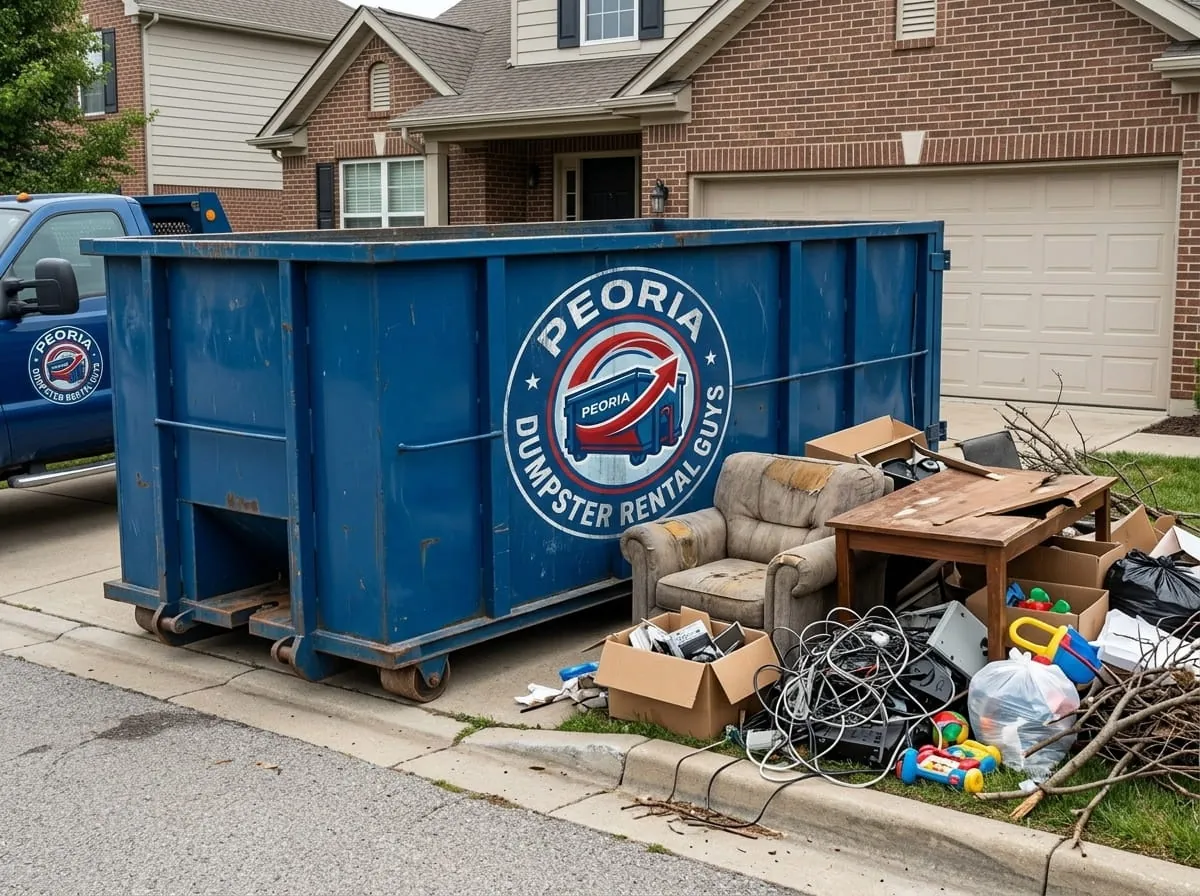
A full-house cleanout can feel overwhelming before you start, but it becomes surprisingly manageable when you break it into rooms and work one space at a time. Whether you are clearing out a Peoria snowbird property between seasonal tenants, downsizing a longtime family home near Old Town, or finally reclaiming a garage that has become a storage unit, the secret is the same: a plan, a system, and the right container waiting in the driveway. This room-by-room checklist walks you through the whole house in a logical order, tells you what to keep, donate, or toss, and helps you pick a dumpster size that fits the job.
Before You Start: Set Up Your System
The biggest time-saver in any cleanout is deciding where things go before you touch a single item. Set up four clearly labeled zones near your work area: Keep, Donate, Sell, and Trash. Use painter's tape and a marker to label boxes or floor sections. When every item has an obvious destination, you stop the endless re-handling that turns a weekend project into a month-long stall.
A few supplies make the whole process smoother: heavy-duty contractor bags, moving boxes, a box cutter, work gloves, and a permanent marker. If you are working through a hot Peoria garage or attic in summer, add water, a fan, and an early start time to the list. Temperatures in the West Valley routinely push past 105 degrees, and enclosed spaces get dangerously hotter, so tackle those areas in the cool early morning.
Finally, plan for volume. Most people dramatically underestimate how much comes out of a full-house cleanout. Having a roll-off dumpster on site removes the single biggest bottleneck, which is not knowing what to do with the growing pile of trash. If you are not sure what size you need, our dumpster size guide breaks it down by project, and you can always reach out for a quick recommendation.
Sequencing: What Order to Work In
Work from the least-used spaces toward the most-used, and from storage areas toward living areas. This keeps your daily life functional while the project is underway. A proven order for a Peoria home:
- Garage and attic first - these hold the most forgotten items and the most obvious trash, so you build momentum fast.
- Patio, yard, and gravel areas next - outdoor debris is easy to sort and gets it out of the way.
- Bedrooms and closets - clothing and personal items sort quickly once you have a rhythm.
- Bathrooms - small, fast, and satisfying wins.
- Living room and common areas - furniture and electronics decisions.
- Kitchen last - you want it usable as long as possible, and it is the most detailed room.
Note for desert homeowners: most Peoria and West Valley homes are built on slab foundations, so unlike homes in colder regions there is rarely a basement to clear. That is one big storage-and-junk trap you get to skip entirely.
Room by Room Checklist
The Garage
The garage is where good intentions go to be stored forever. Start by pulling everything out into the driveway so you can see what you actually have. Sort ruthlessly.
- Keep: tools you have used in the past year, current sporting gear, genuinely useful hardware.
- Donate: working power tools, extra ladders, bikes, and camping gear in good shape.
- Toss: dried-out paint, cracked hoses, broken lawn equipment, expired chemicals, and mystery boxes you have not opened in years.
Watch for heat-damaged items - stored plastics, adhesives, and old paint cans degrade fast in a Peoria garage that hits 120 degrees in July. Hazardous materials like solvents, pesticides, and automotive fluids should not go in a dumpster; take them to a Maricopa County household hazardous waste event instead.
The Attic
Attics collect holiday decorations, old furniture, and boxes of paperwork. Because attic access is tight and the space bakes in summer, work in short shifts and pass items straight down to a helper. Most of what comes out of an attic is either sentimental (keep or photograph) or degraded by heat and time (toss). Watch for rodent-damaged boxes and insulation debris, which belong in the dumpster, not the donation pile.
Patio, Yard, and Gravel Areas
West Valley yards produce a specific kind of debris: sun-faded patio furniture, broken shade structures, dead landscaping, and the gravel and rock that shifts and mixes with organic debris over the years. Rake out accumulated leaves, palm fronds, and yard trimmings. Broken pavers, old irrigation lines, and cracked planters all go to the dumpster. Keep in mind that clean landscaping rock and dirt are heavy - if you are clearing large volumes of gravel, mention it when ordering so your container is loaded safely within weight limits.
Bedrooms and Closets
Bedrooms are mostly a clothing-and-textiles sort. Pull everything from the closet and use the one-year rule: if you have not worn it in a year and it is not sentimental or seasonal, it goes to donate. Bag torn, stained, or worn-out textiles separately - many are not donatable and head to the trash. Old mattresses, bed frames, and dressers are common cleanout items; heavy furniture like this is a major reason people rent a roll-off rather than making a dozen dump runs.
Bathrooms
Bathrooms are fast. Toss expired medications (safely - not in the trash if a take-back option exists), old cosmetics, worn towels, and empty containers. Donate unopened, unexpired toiletries. If you are renovating, old vanities, mirrors, and fixtures add up in weight, so factor that into your container size.
Living Room and Common Areas
This is where the big furniture decisions live. Sofas, entertainment centers, bookshelves, and rugs are bulky and often too worn to donate. For working electronics, seek out e-waste recycling rather than the landfill. Large, heavy, or broken furniture is exactly what a dumpster is built for. If you would rather not do the heavy lifting yourself, our junk removal service can handle the loading for you.
The Kitchen
Save the kitchen for last so it stays usable. Work cabinet by cabinet and drawer by drawer. Donate duplicate small appliances, extra dishware, and gadgets you never use. Toss chipped dishes, scratched nonstick pans, and expired pantry items. Large appliances - refrigerators, ranges, dishwashers - need special handling. Fridges and freezers must have refrigerant removed by a professional before disposal, so let your hauler know if appliances are part of the load.
Sorting Donations vs. Landfill
A good rule: if you would give it to a friend without embarrassment, it can be donated. If it is broken, stained, cracked, or missing parts, it is trash. Do not "wish-cycle" by dropping unusable junk at a donation center - it just shifts your disposal cost onto a charity.
The West Valley has solid donation options. Goodwill and Habitat for Humanity ReStore locations across Peoria, Glendale, and Surprise accept furniture, housewares, building materials, and working appliances. Many will arrange pickup for large qualifying items. Schedule donation drop-offs early in your cleanout so those items leave the property and free up space to keep working.
What Size Dumpster for a Full-House Cleanout?
Sizing depends on the home and how much you are clearing. Here is a practical guide:
| Cleanout Scope | Recommended Size | Best For |
|---|---|---|
| Single room or light declutter | 10-yard | One bedroom, small garage tidy |
| Multi-room or partial home | 15-yard | Condo, snowbird turnover, downsizing |
| Full-house cleanout | 20-yard | Whole home with furniture and appliances |
| Large estate or hoarding cleanout | 30-yard | Decades of accumulation, heavy volume |
For most full-house cleanouts, the 20-yard dumpster is the sweet spot - big enough for furniture and appliances, but low enough to load without a struggle. If you are handling a loved one's home, our estate cleanout service and our estate cleanout checklist walk through the extra steps involved. You can review all of our container options and services on our services page.
Peoria-Specific Tips
- Beat the heat: work garages, attics, and outdoor areas in the early morning. Summer highs make midday work in enclosed spaces genuinely dangerous.
- Snowbird and seasonal turnovers: if you manage a seasonal home, schedule cleanouts in spring before residents leave for cooler climates, so the property is fresh for the next season.
- Know your HOA bulk-trash limits: many Peoria HOAs cap how much bulk trash you can set out and how often. A dumpster sidesteps those limits entirely and keeps piles off your curb.
- Gravel and rock: these are heavy. Keep heavy landscaping debris to one section of the container and tell us if you are disposing of large volumes.
- Hazardous waste: paint, chemicals, and automotive fluids go to a county HHW facility, not the dumpster.
Putting It All Together
A room-by-room approach turns an intimidating full-house cleanout into a series of small, winnable projects. Set up your four-zone system, work from storage spaces toward living areas, get donations out early, and keep a right-sized dumpster in the driveway so nothing stalls. Whether it is a seasonal turnover, a downsizing move, or clearing a family home, having the container on site is what keeps the momentum going from the first cabinet to the last.
Ready to get started? Call Peoria Dumpster Rental Guys at (928) 543-0503 and we will help you pick the right size and get a roll-off delivered to your Peoria driveway - so you can focus on the sorting and leave the hauling to us.
Founder, Peoria Dumpster Rental Guys — sharing straight advice from more than 15 years of local hauling experience.
Frequently Asked Questions
What size dumpster do I need for a full-house cleanout in Peoria?
For most whole-home cleanouts that include furniture and a few appliances, a 20-yard dumpster is the ideal choice - it holds a large volume while staying easy to load. Smaller condos or snowbird turnovers may only need a 15-yard, while large estates with decades of accumulation often call for a 30-yard. If you are unsure, call us at (928) 543-0503 and describe the home, and we will recommend the right size.
What items can't go in the dumpster during a cleanout?
Household hazardous materials cannot go in a roll-off dumpster. That includes old paint, solvents, pesticides, automotive fluids, and batteries - all common finds in a hot Peoria garage. These should go to a Maricopa County household hazardous waste event. Refrigerators and freezers also need refrigerant professionally removed before disposal. Let us know if appliances are part of your load and we will guide you.
Where can I donate usable items in the West Valley?
Peoria and the surrounding West Valley have several great options. Goodwill and Habitat for Humanity ReStore locations across Peoria, Glendale, and Surprise accept furniture, housewares, working appliances, and building materials. Many will arrange pickup for large qualifying items. Schedule donation drop-offs early in your cleanout so those items leave the property and free up space to keep working.
How do I handle a cleanout in the Arizona heat?
Timing is everything. Work garages, attics, and outdoor areas in the early morning before temperatures climb, since enclosed spaces get dangerously hot in a Peoria summer. Stay hydrated, take breaks, and pass items down from the attic to a helper rather than carrying loads through the heat. Tackling the hottest spaces first thing keeps the project safe and moving.
Can you help with the heavy lifting, not just the dumpster?
Yes. If you would rather not load heavy furniture and appliances yourself, our junk removal service can do the labor for you, and our estate cleanout service is available when you are clearing a loved one's home. Call (928) 543-0503 to talk through what you need, whether that is just a dumpster in the driveway or a full-service crew.