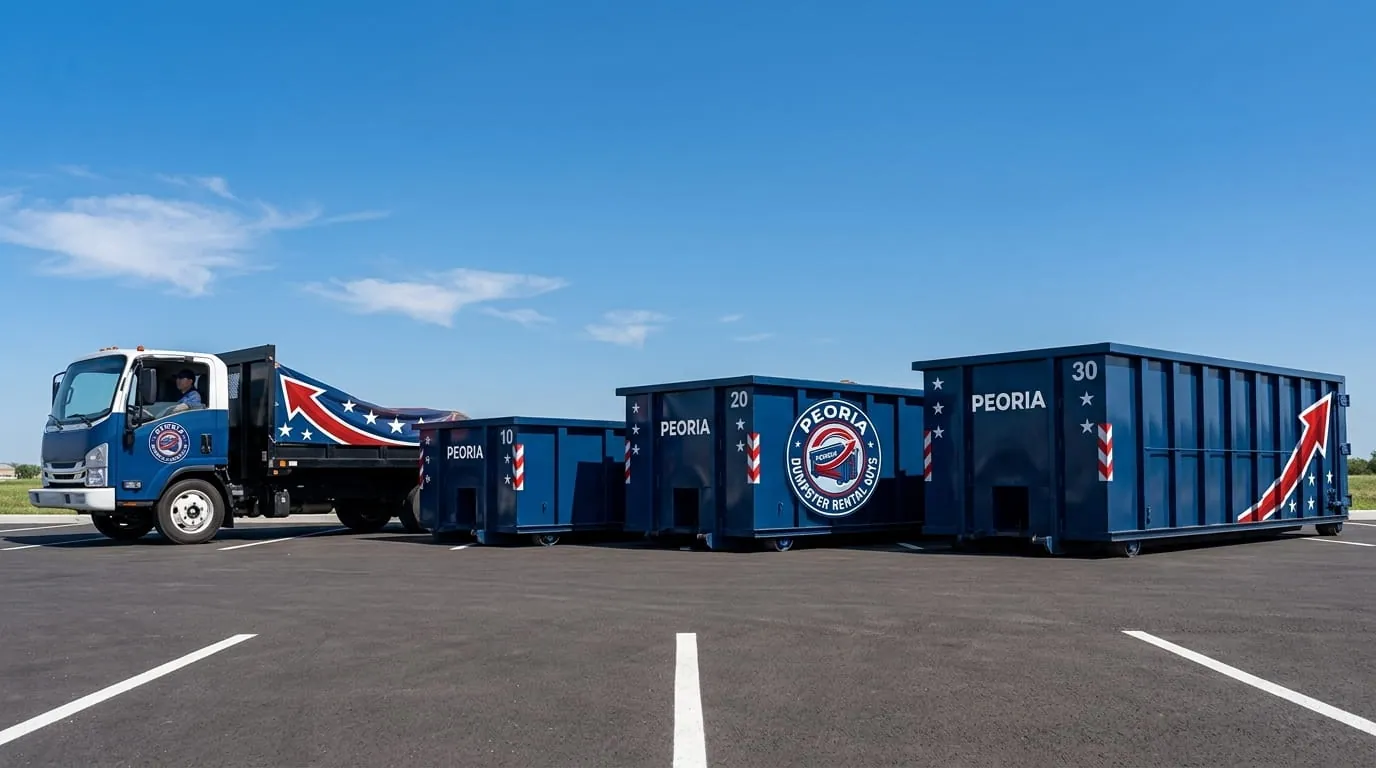
A roll-off dumpster is one of the most useful tools you can park in a driveway, but it is also one of the heaviest. An empty 10-yard can weighs a couple thousand pounds on its own, and once it is loaded with roofing shingles, concrete, or a garage full of debris, you can be looking at several tons resting on four narrow steel wheels and two rear contact bars. Put that kind of load on the wrong surface, in the wrong spot, on a 112-degree Peoria afternoon, and you can end up with dents, stains, or hairline cracks that outlast the project by years. The good news is that driveway damage is almost entirely preventable. With a little planning and a few boards, your driveway will look exactly the same the day the dumpster leaves as it did the day it arrived.
Why a Roll-Off Can Mark or Crack a Driveway
The problem is not really the total weight of the dumpster. It is how that weight is concentrated. When a delivery truck rolls a container off its bed, the whole load pivots onto the rear rollers and the back edge of the frame. For a few seconds, thousands of pounds press down through contact points no bigger than your hand. That same concentration happens in reverse during pickup, and it happens every time the driver repositions the box. Steel wheels and frame rails can scuff sealant, gouge soft asphalt, or press divots into surfaces that would happily support a parked car spread across four rubber tires.
On top of the mechanical pressure, there is a chemical and thermal side. Dumpsters that have hauled roofing or demolition debris can carry tar, oil, and grit on their undersides. Left sitting for a week, those residues can leave rust rings or dark stains on light concrete. And in the desert, heat changes everything about how your driveway behaves under load.
Arizona Heat Is the Real Threat
If you take one thing away from this guide, make it this: extreme summer heat is the single biggest driveway risk in Peoria, and it is one most homeowners never think about. Asphalt is a petroleum-based material, and it softens as it warms. On a normal day that is not a problem. But Peoria regularly sees stretches of 110 to 118 degrees from June through September, and pavement surface temperatures in direct sun can climb 40 to 60 degrees hotter than the air. That means the asphalt your dumpster is sitting on can effectively be at 150 to 170 degrees.
At those temperatures asphalt behaves less like a solid and more like stiff clay. Concentrated weight that would never leave a mark in April can press permanent dimples, ruts, and wheel imprints into the surface in July. We have seen asphalt driveways that were perfectly fine hold a clean impression of a dumpster's rear rollers after a single hot afternoon, simply because the box sat in one spot while the sun did its work. Concrete does not soften the same way, but the heat still matters: rapid expansion and the added stress of a heavy load on an existing hairline crack can help that crack open up.
The practical takeaways for a Peoria summer are simple. Ask for delivery in the morning when surfaces are coolest. Never let a loaded container sit on bare asphalt in peak sun without protection underneath. And if your project runs into a heat wave, put extra effort into spreading the load. The hotter it is outside, the more your driveway needs the boards we are about to talk about.
Boards and Plywood: Your First Line of Defense
The most effective, lowest-cost protection is a layer of wood between the dumpster and your driveway. Boards do two jobs at once. They create a barrier so steel never touches your finished surface, and they spread the concentrated load over a much larger footprint so no single point takes the full pressure.
- Under the wheels and rear contact points: Place sturdy planks or thick plywood where the container's wheels and back frame will rest. This is where the crushing force lands during drop-off and pickup, so it is the most important area to protect.
- Use thick, solid material: Two-by-tens, two-by-twelves, or three-quarter-inch or thicker plywood work well. Thin scrap can crack under the load and do nothing. Old shingle wood or flimsy pallets are not enough.
- Lay a full path, not just pads: For asphalt or pavers in summer heat, consider running boards under the entire length the container will occupy rather than just the contact points. The more area you cover, the lower the pressure per square inch.
- Keep the surface clean: Sweep away rocks and grit before setting boards down. A single sharp stone trapped under a plank can be pressed into concrete or asphalt like a stamp.
A good hauler will bring and place boards as a matter of routine, but it never hurts to have a few of your own on hand, especially if you know your driveway is delicate or newly sealed.
Weight Distribution and Where the Load Sits
How you fill the dumpster affects the driveway too. Heavy, dense materials like concrete, dirt, tile, and wet roofing should be spread evenly across the floor of the container rather than piled at one end. A load concentrated over the rear wheels multiplies the pressure on that one strip of driveway. Spreading dense debris across the box keeps the weight balanced and lowers the peak load on any single contact point.
Placement matters as much as loading. Aim to set the container on the flattest, most solid section of the driveway. Avoid parking it directly over expansion joints, existing cracks, or the thin edges of a slab where the concrete is weakest and most likely to chip. If your driveway slopes, a level pad reduces the chance the box shifts or rolls during loading.
Concrete vs. Pavers vs. Gravel
Different surfaces need different care, and Peoria's master-planned communities have all three.
Concrete
Concrete is the most forgiving surface and the most common. It handles the weight of a roll-off well, but it is not bulletproof. The real risks are surface scuffs from steel wheels, rust and tar stains from a dirty container sitting too long, and cracks propagating from existing weak points. Boards under the contact points solve most of this. If your concrete is stamped, stained, or decorative, treat it like a finished floor and protect the whole footprint.
Pavers
Paver driveways are everywhere in Peoria's newer subdivisions, and they are the most vulnerable to dumpster damage. Individual pavers can crack, chip, or sink under concentrated load, and even if they survive the weight, the sand joints between them can shift, leaving an uneven, wavy surface. Wheels can also catch an edge and pop a paver loose. If you have pavers, a continuous plywood platform under the entire container is strongly recommended, not optional. Many homeowners with paver drives choose to place the dumpster on the street or a gravel area instead, which brings its own permit considerations.
Gravel and Pavers-Adjacent Surfaces
Gravel and decomposed granite areas can actually be a fine choice because there is no finished surface to mar, but they come with a catch. Soft or uneven ground can let the container settle unevenly, and on a hot, loose base the wheels can dig in. A few boards still help keep the box level and make pickup easier. Never place a heavy loaded container on soggy or freshly graded ground.
| Surface | Main Risk | Recommended Protection |
|---|---|---|
| Concrete | Scuffs, stains, cracks from weak points | Boards under wheels and rear frame |
| Asphalt | Heat-softened ruts and imprints | Full-length boards; morning delivery |
| Pavers | Cracked or sunken pavers, shifted joints | Continuous plywood platform, or place elsewhere |
| Gravel/DG | Uneven settling, wheels digging in | Boards for leveling; avoid soft ground |
Backing, Loading, and Pickup Care
A lot of damage happens in the moving, not the sitting. When the truck backs in to drop or retrieve the box, tight turns can drag a wheel across your driveway and leave a black scuff or a gouge. Give the driver room and a clear, straight approach when you can. Keep cars, trash cans, and low-hanging obstacles out of the path so the driver is not forced to maneuver hard right next to your garage or landscaping.
During the rental, avoid dragging heavy items across the driveway to load them, and never let the container get overfilled to the point that the door will not close, which forces the driver to reposition or wrestle the box on pickup. If you booked a size that fits the job, loading stays balanced and pickup is smooth. If you are not sure what you need, our guide on what size dumpster do I need walks through it, and a 10-yard dumpster is often the right call for a driveway-friendly footprint on smaller projects.
What a Good Hauler Does Automatically
The single best form of driveway protection is hiring a company that already treats your property like their own. When you book a professional roll-off dumpster rental, driveway care should be built into the service, not something you have to beg for. Here is what we do without being asked:
- Place protective boards under the wheels and rear contact points on every driveway placement.
- Recommend morning delivery during the hot months so the box lands on cooler pavement.
- Ask about pavers, decorative concrete, and HOA rules before we ever pull into your drive.
- Position the container on the strongest, flattest section and away from cracks and joints.
- Back in and pull out slowly, on a clear path, to avoid scuffs and edge damage.
- Keep containers clean so they do not leave tar or rust stains behind.
If a hauler shrugs at these questions, that tells you how your driveway will be treated. Our residential dumpster rental service is built around leaving your property exactly as we found it.
HOA Driveways and Peoria's Master-Planned Communities
Peoria is full of HOA-governed neighborhoods where the driveway is not just your property, it is part of a community standard you agreed to maintain. A cracked paver or a stained slab can mean a violation notice and an out-of-pocket repair. That raises the stakes on getting placement right the first time. Before your dumpster arrives, check your HOA rules for where containers may sit, how long they can stay, and whether street placement requires notice. Taking a few photos of your driveway before delivery is also smart, so there is a clear record of its condition.
Quick Pre-Delivery Checklist
- Sweep the placement area clear of rocks and grit.
- Have thick boards or plywood ready, or confirm the hauler will bring them.
- Request a morning drop-off in summer heat.
- Clear a straight, obstacle-free path for the truck.
- Identify the flattest, crack-free spot away from joints and slab edges.
- Photograph your driveway and confirm HOA placement rules.
- Book the right size so the load stays balanced.
Protecting your driveway comes down to a few boards, smart placement, and a hauler who respects your property, especially in Peoria's punishing summer heat. Peoria Dumpster Rental Guys places protective boards on every driveway delivery, schedules around the heat, and treats paver and HOA driveways with the extra care they need. Ready to book, or have questions about your specific surface? Call us at (928) 543-0503, explore our full list of services, or contact us and we will help you plan a placement that leaves your driveway spotless.
Founder, Peoria Dumpster Rental Guys — sharing straight advice from more than 15 years of local hauling experience.
Frequently Asked Questions
Will a dumpster really damage my concrete driveway?
It can if it is placed carelessly. Concrete handles the weight well, but steel wheels and the rear frame can scuff the surface, and a container that sits dirty for a week can leave rust or tar stains. Placing boards under the wheels and contact points prevents nearly all of this, and a good hauler does it automatically.
Why does Arizona heat make driveway damage more likely?
Asphalt softens as it heats, and Peoria pavement in direct summer sun can reach 150 to 170 degrees. At those temperatures a heavy dumpster can press permanent ruts and wheel imprints into asphalt that would be perfectly fine in cooler months. Request morning delivery and use full-length boards during hot stretches to protect the surface.
Are paver driveways safe for a dumpster?
Pavers are the most vulnerable surface. Individual pavers can crack or sink under concentrated weight, and the sand joints can shift and leave the drive uneven. If you have pavers, use a continuous plywood platform under the entire container, or place the dumpster on the street or a gravel area instead. Tell your hauler about pavers when you book.
Should I put boards down myself, or does the hauler handle it?
A professional hauler brings and places boards on every driveway delivery as part of the service. That said, having a few thick planks or sheets of plywood on hand is smart if your driveway is newly sealed, decorative, or made of pavers, so you can add extra coverage where you want it.
Where is the best spot to place a dumpster on my driveway?
Choose the flattest, most solid section, away from expansion joints, existing cracks, and the thin edges of the slab where concrete chips most easily. Keep the truck's path clear and straight so the driver does not have to make tight turns that scuff the surface. In an HOA community, confirm placement rules first.